Day 15: Christina Rossetti, Bonnie Jo Campbell, Ursula K Le Guin
Note: I have changed things up a bit, putting the poem up first instead of last, as I tend to ramble and quote more from essays whose topics I understand are often of limited interest to anyone else, whereas poems are for everyone. Well, I picked a bad one today.
Poem: Christina Rossetti - The Goblin Market
I am very sorry, but I hated this poem. If I could describe the poem in two words, I would say "frilly" and "sticky", and the wet and frilly stickiness of this poems makes me feel sick.
I have always hated fruit salad and the wretched juice it leaves behind. Even worse is something I already find gross is used as euphemism.
I don't have a problem reading about the Wild Act, though I prefer not to. The short story below describes a mattress "crusted with jizzum" and somehow this is far less disgusting to me than Rossetti's coy descriptions of "juice that syruped all her face, / And lodged in dimples of her chin, / And streaked her neck which quaked like curd."
Again, I just really hate the mess of fruit. I also hate goblins.
I get that I am meant to appreciate this poem as a Christian/Marxist/Queer-Theory allegory but I just don't care about interpretations, and this gotcha deciphering won't redeem the annoying Primness of the first three quarters and the yuckiness of the last, and then, the worst bit being the hunky-dory moral at the end as if this were a childrens story all along. Yeah right.
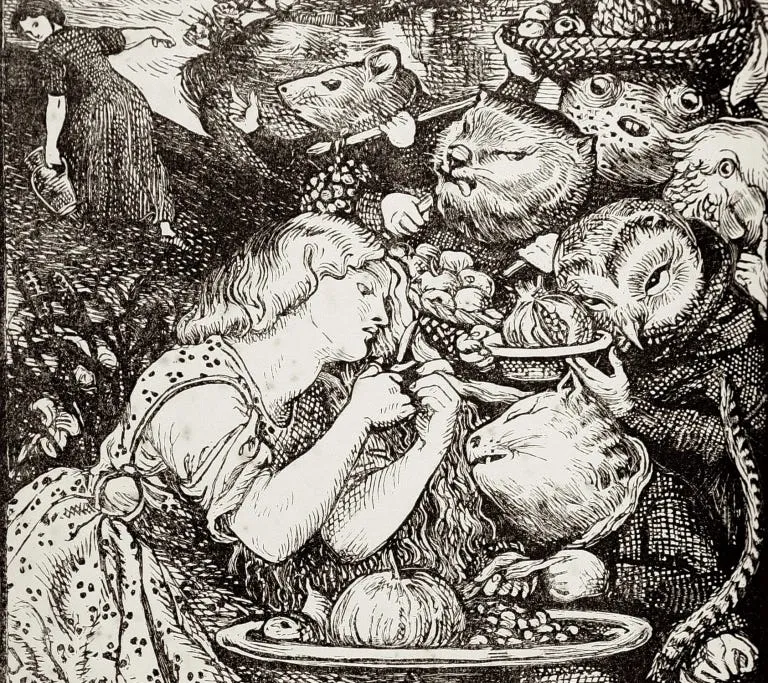
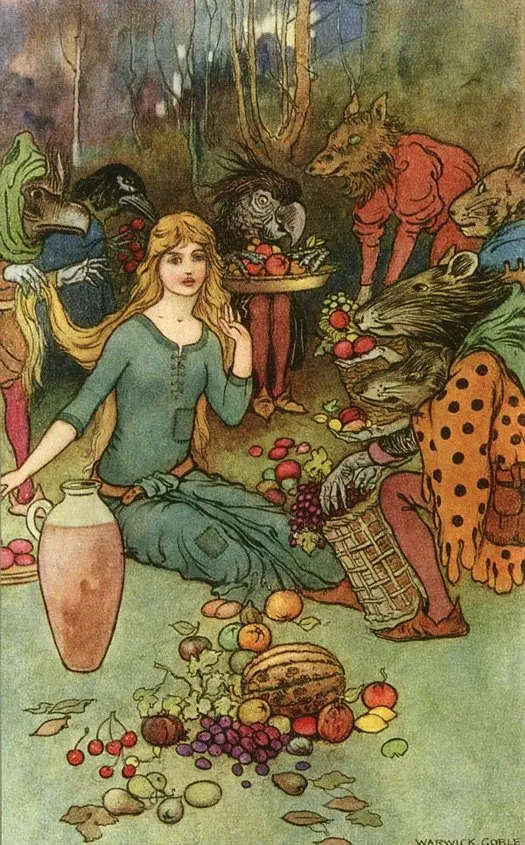
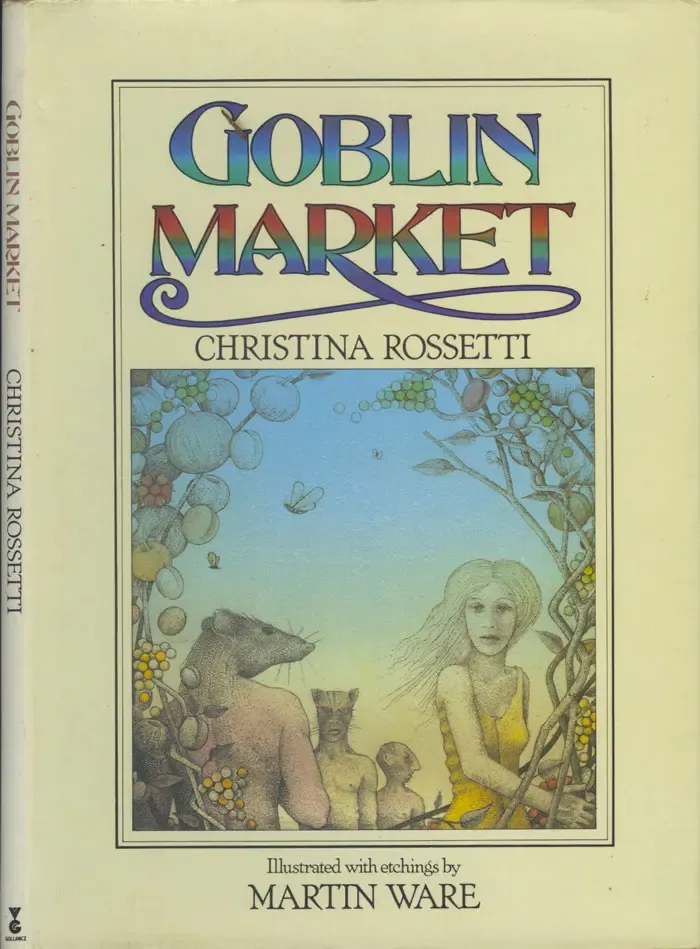
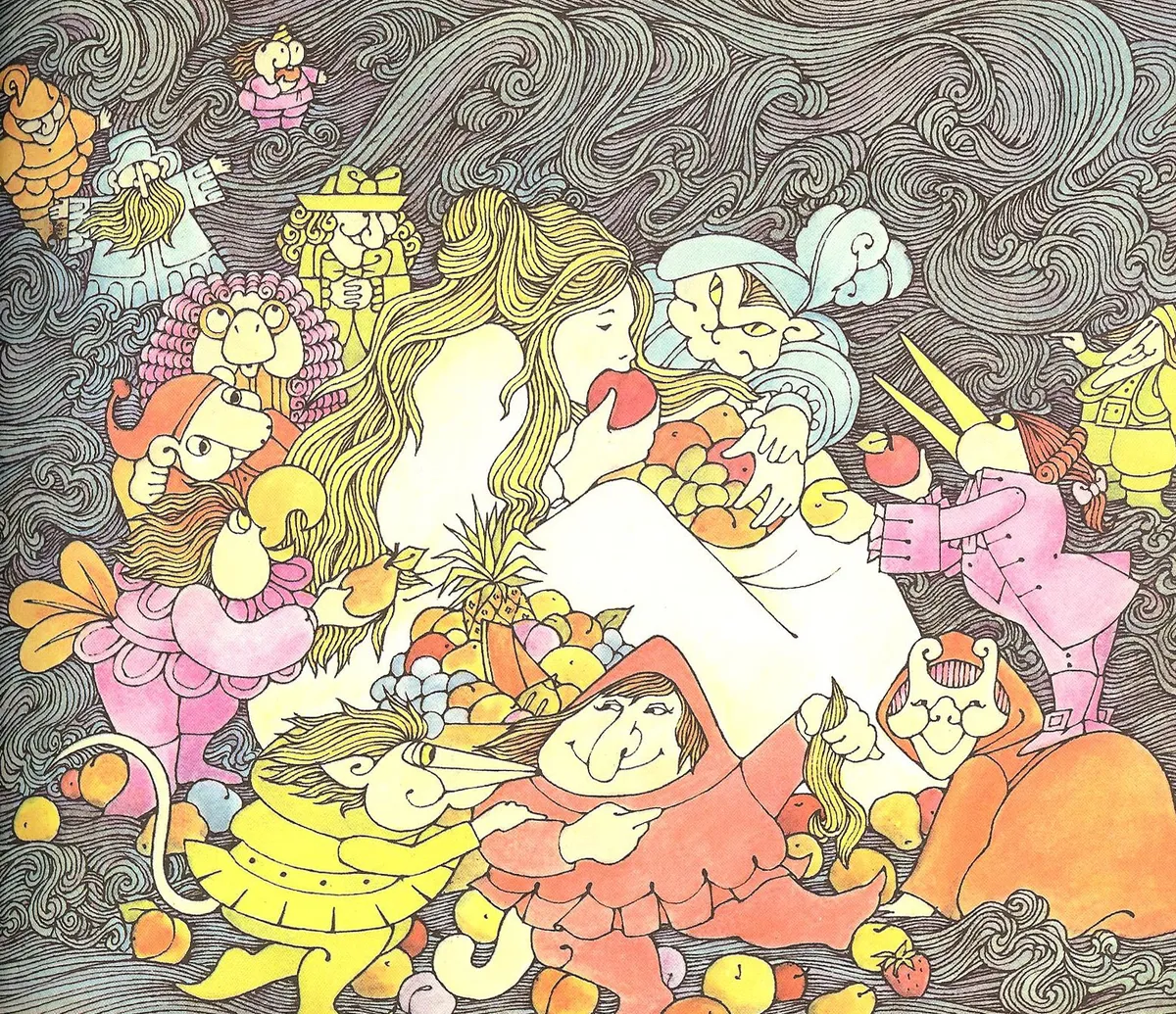
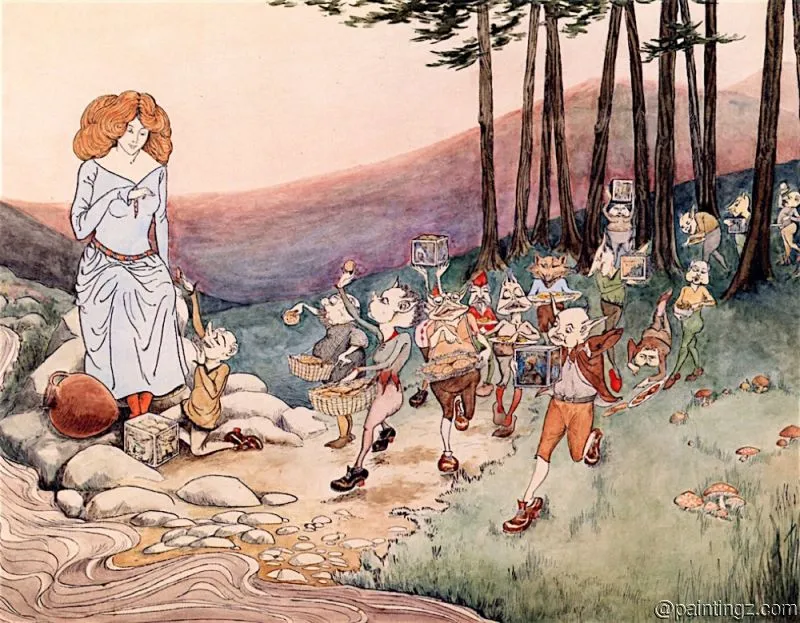
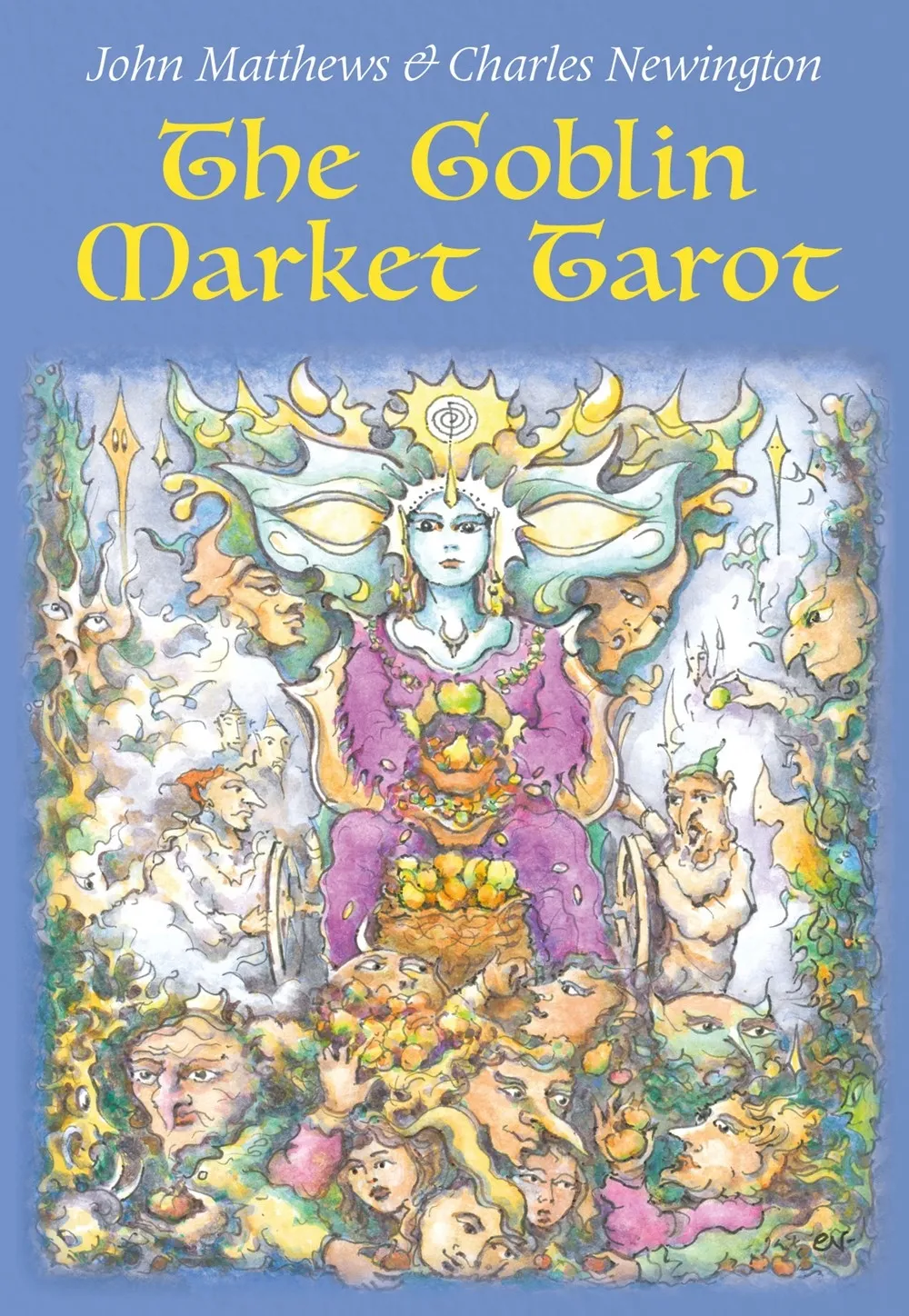
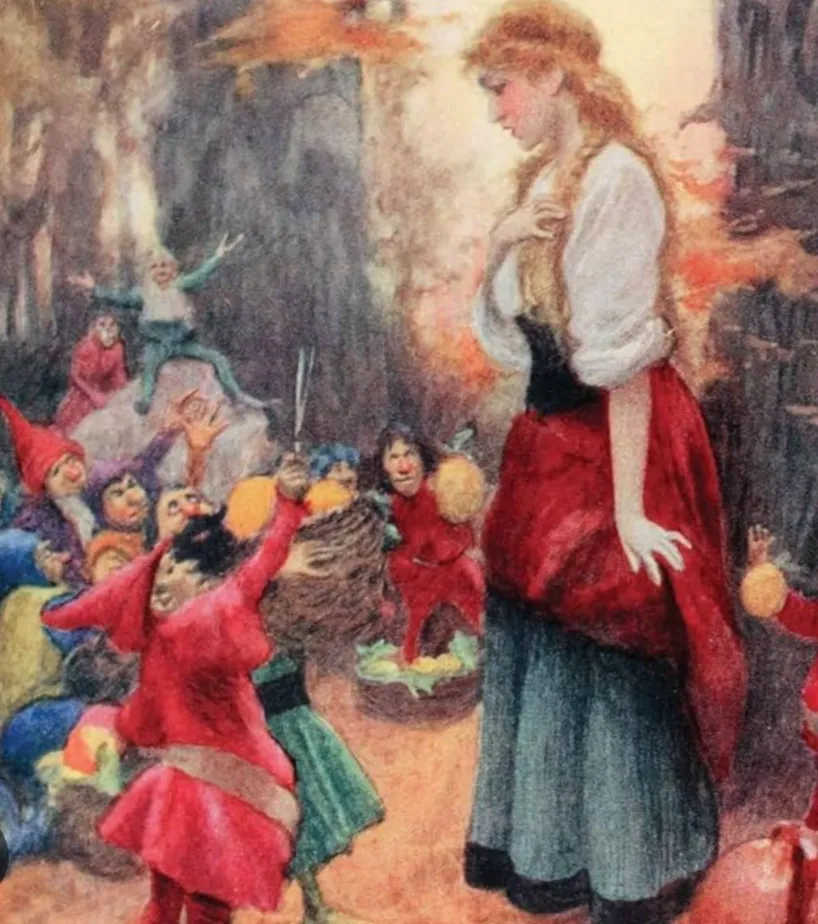
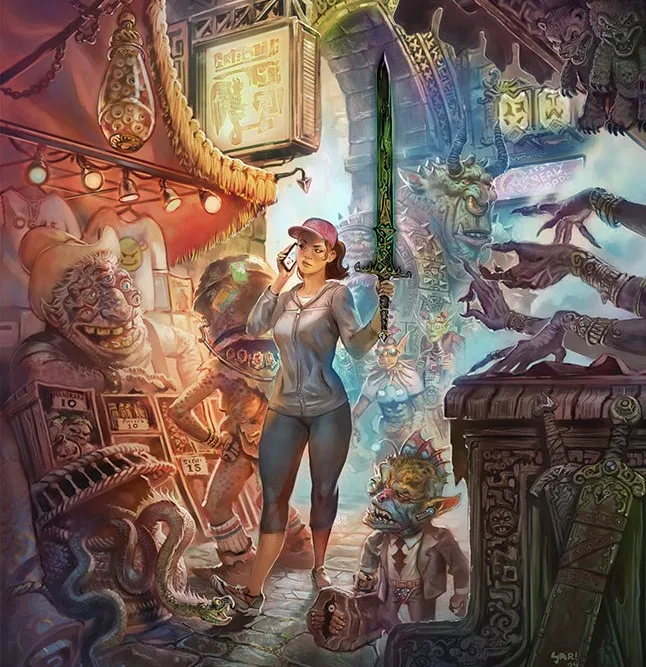
If theres one thing I liked, I like that the goblins had animal heads. I still pictured them all as Dobby.
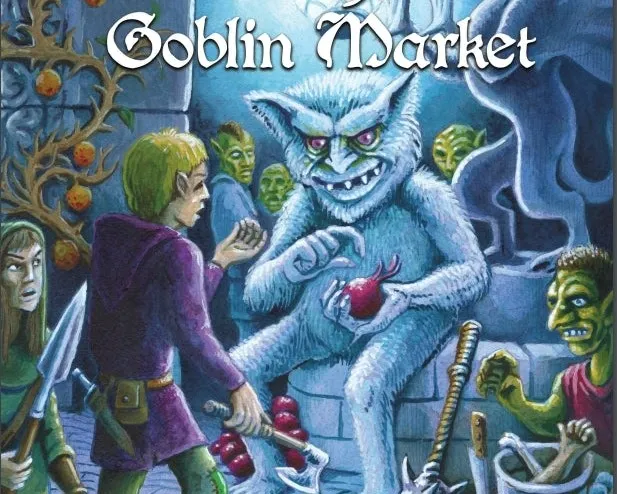
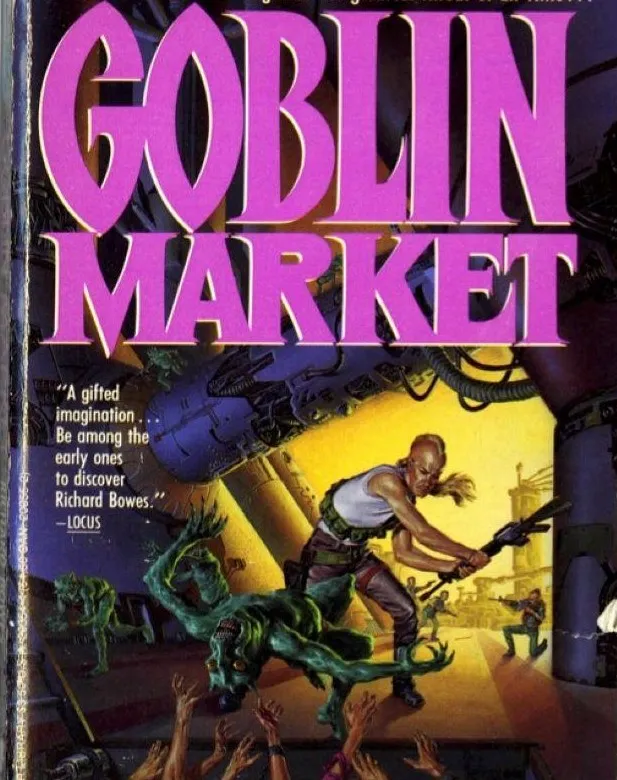
I do find it interesting to see how illustrators have approached this story, some being incredibly off the mark. I have ordered the pictures from most-to-least faithful.
Story: Bonnie Jo Campbell - The Tresspasser
A very short and frightening story in which a wealthy family come home to see their house had been used by vagrants as a makeshift meth-lab. There is a really horrific and quite rancid part of the story that I won't spoil.
This story actually fills me with palpable fear, and for that reason it is worth reading. Read it here.
Also, it is odd to have read two of these kinds of stories in two days, the other being a Joyce Carol Oates one from yesterday. Both tales were recommended when I searched for Detroit stories.
Essay: Ursula Le Guin - "Where do you get your ideas from?"
Note: This one contains a lot of quotes for further reference.
Le Guin responds to that repetitive question, seeing it as naive, a question that assumes that having an idea is the magic bullet, rather than the skill that comes with practice and reflection. She then reframes this question as "how do you write good stories?", in which case she has an answer:
That good fiction is essentially comprised of five elements:
- The patterns of the language—the sounds of words.
- The patterns of syntax and grammar; the ways the words and sentences connect themselves together; the ways their connections interconnect to form the larger units (paragraphs, sections, chapters); hence, the movement of the work, its tempo, pace, gait, and shape in time.
- The patterns of the images: what the words make us or let us see with the mind’s eye or sense imaginatively.
- The patterns of the ideas: what the words and the narration of events make us understand, or use our understanding upon.
- The patterns of the feelings: what the words and the narration, by using all the above means, make us experience emotionally or spiritually, in areas of our being not directly accessible to or expressible in words.
A good story should be unitary, ie. have all five things.
Le Guin is not wrong, but this is some Hard advice to handle!!! What a lot of worry! What a lot of work! That is her big take: don't worry about ideas, worry about the work.
This article does not have the soft encouragement you get from writing-as-therapy handbooks. Imagine saying this to a first-year undergrad:
Ignorance of English vocabulary and grammar is a considerable liability to a writer of English. The best cure for it is, I believe, reading. People who learned to talk at two or so and have been practicing talking ever since feel with some justification that they know their language; but what they know is their spoken language, and if they read little, or read schlock, and haven’t written much, their writing is going to be pretty much what their talking was when they were two.
Heres a point on the importance of imagery:
The fictional world has to be created by the author, whether by the slightest hints and suggestions, which will do for the suburbs, or by very careful guidance and telling detail, if the reader is being taken to the planet Gzorx. When the writer fails to imagine, to image, the world of the narrative, the work fails. The usual result is abstract, didactic fiction. Plots that make points. Characters who don’t talk or act like people, and who are in fact not imaginary people at all but mere bits of the writer’s ego got loose, glibly emitting messages. The intellect cannot do the work of the imagination; the emotions cannot do the work of the imagination; and neither of them can do anything much in fiction without the imagination.
Questions to ask when editing your work (not while writing):
The blind, beautiful arrogance of the creative moment must grow subtle, self-conscious, clear-sighted. It must ask questions, such as: Does this say what I thought it said? Does it say all I thought it did? It is at this stage that I, the writer, may have to question the nature of my relationship to my readers, as manifested in my work. Am I shoving them around, manipulating them, patronizing them, showing off to them? Am I punishing them? Am I using them as a dump site for my accumulated psychic toxins? Am I telling them what they better damn well believe or else? Am I running circles around them, and will they enjoy it? Am I scaring them, and did I intend to? Am I interesting them, and if not, hadn’t I better see to it that I am? Am I amusing, teasing, alluring them? Flirting with them? Hypnotizing them? Am I giving to them, tempting them, inviting them, drawing them into the work to work with me —to be the one, the Reader, who completes my vision?
The closing remarks:
Even under the most skilled control, the words will never fully embody the vision. Even with the most sympathetic reader, the truth will falter and grow partial. Writers have to get used to launching something beautiful and watching it crash and burn. They also have to learn when to let go control, when the work takes off on its own and flies, farther than they ever planned or imagined, to places they didn’t know they knew. All makers must leave room for the acts of the spirit. But they have to work hard and carefully, and wait patiently, to deserve them.
I am glad to get some good, hardnosed advice for my own creative writing, which I do not think Mrs Le Guin would be so impressed with.
This essay is available in her collection "Dancing at the Edge of the World" which is currently in the free-section of Audible.