Day 24: Laura Riding, Joy Williams, Nina Power
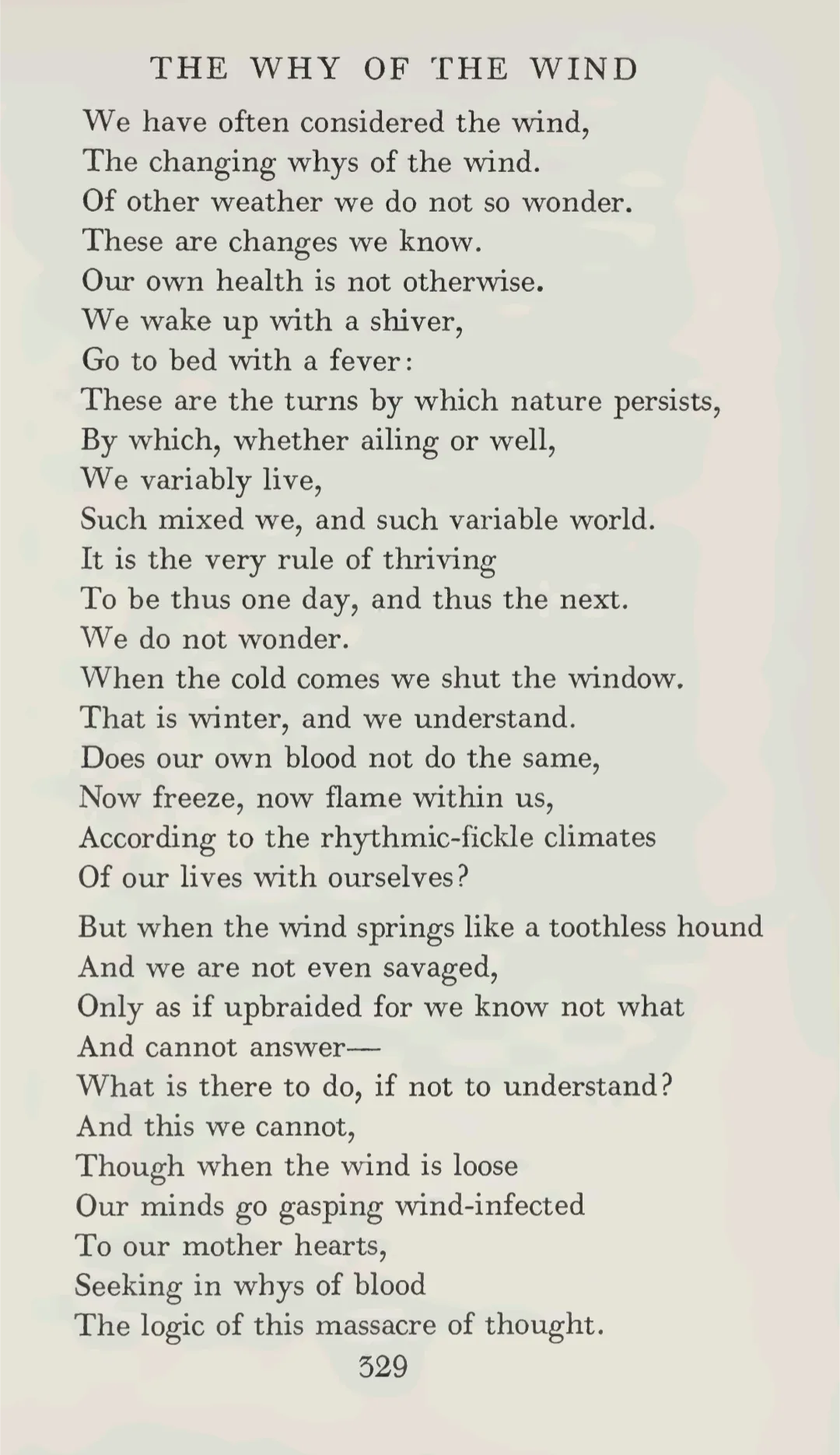
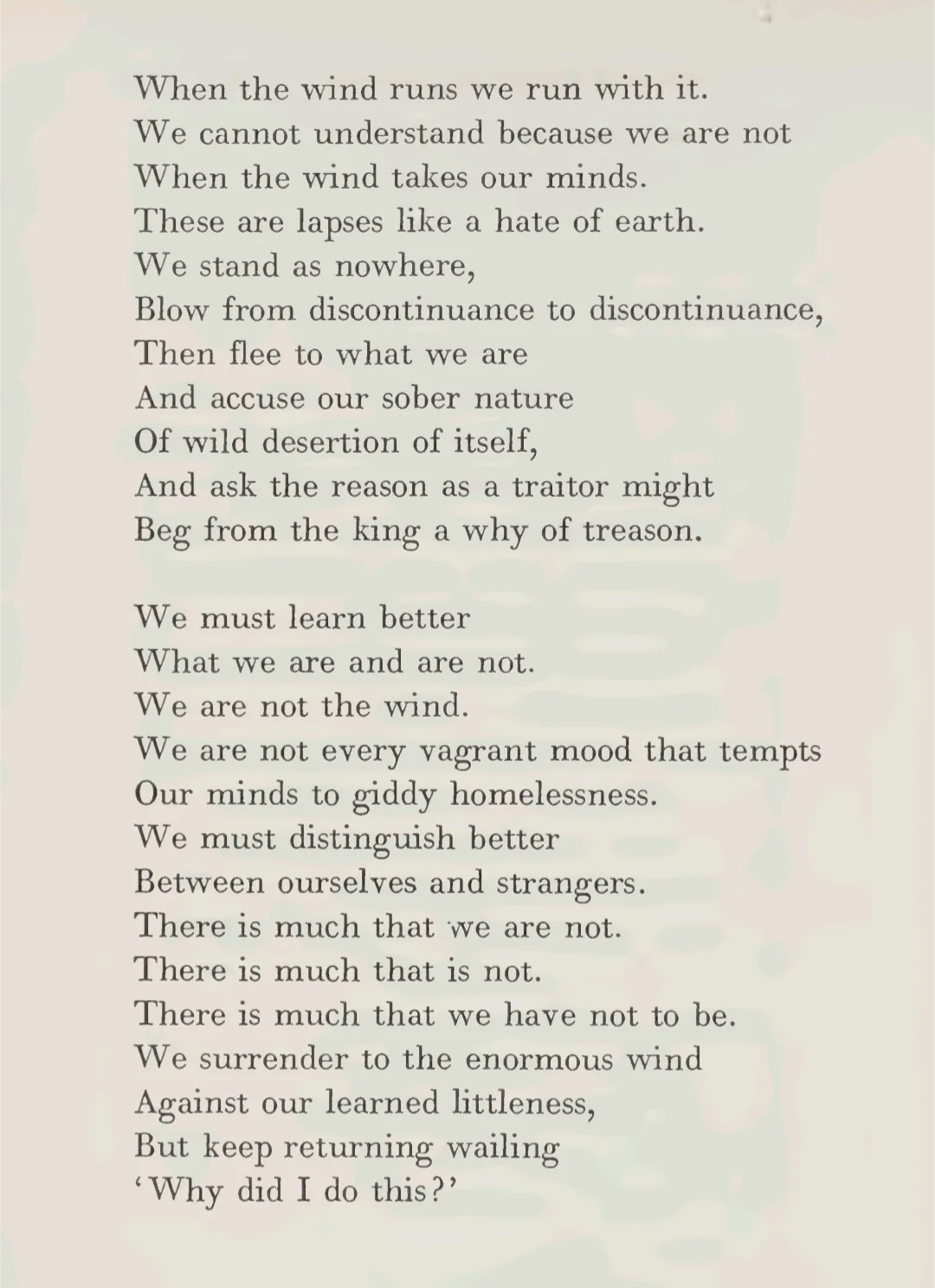
Laura Riding - The Why of the Wind
Read the full poem at the end of the post.
Another poem of Riding's I really like. I am slowly making my way through a book of her poems.
The poem is concerned with an ethics of self-restraint- one that reminds me more of the Buddhists than the Stoics.
We must learn better
What we are not.
We are not the wind.
We are not every vagrant mood that tempts
Our minds to giddy homelessness.
We must learn to distinguish better
Between ourselves and strangers.
The Buddha said that we have no "self" as we know it - that our thoughts, feelings and preferences are just hallucinations of the ego. The real self is the clarity that comes when the mind reaches a silence. Thus we should learn not to take our windiest thoughts too seriously, to to chase after them, as this often leads us into bad places.
In theory I should dislike didactic art or those that spouse ethics, but also, that is the contemporary critic voice talking. When I trust the writer and they phrase what they say so beautifully, I am receptive to what they have to say. I was raised in the nihilistic secular way, life being framed as a series of self-gratifications (just dont hurt no one too much) so I am quite glad to find ethical wisdom wherever I can, to find a way forward.
Joy Williams - 99 Stories of God 1-20
99 really short stories that often cause one to scratch their head. "Wait, was that a story?". In this way they remind me a bit of Lydia Davis's writings, but are less concerned with the quotidian and more urban legends or the banal-fantastic.
I have read the first twenty stories, all about a page, and there are a few standouts.
The seventeenth story "Dresser" concerns an ex-alcoholic mother who has been sober twelve years and is now dying of cancer. Then on her death bed, he last wish is for her son to bring her a martini:
But I didn’t, I wouldn’t. I felt she’d regret it. I felt it just wasn’t right.
My favourite is this story:
When he was a boy, someone’s great-grandfather told him this story about a traveler in thirteenth-century France.
The traveler met three men pushing wheelbarrows. He asked in what work they were engaged, and he received from them the following three answers.
The first said: I toil from sunrise to sunset and all I receive for my labor is a few francs a day.
The second said: I’m happy enough to wheel this wheelbarrow, for I have not had work for many months and I have a family to feed.
The third said: I am building Chartres Cathedral.
But as a boy he had no idea what a chartres cathedral was.
I have been thinking about it all day. Both the proverbial wisdom of the great-grandfather on meaningful labour, but also the really funny non-twist of the ending.
I enjoyed puzzling through all the stories, and look forward to reading the rest.
Nina Power - On Being Hated
I sometimes listen to The Lack podcast where Nina Power and a couple others discuss critical theory in relation to movies. I find it mostly enlightening and waffle-free, except for when Helen goes on a Lacanian babble-rant. Power is probably the most provocative host, and her merry fury at whatever is stupid in culture can sometimes feel over the top. I don't agree with her on several things, but I do think that unthinking silliness on both the right and left deserves to be critiqued, so to be understood. Nina Power is a leftist but is often called a nazi by extreme left who got together to cancel her a few years ago for her statements and provocations. There was a big court case, but the slander seemed to have very little real evidence based on things taken out of context.
To me it is like trying to cancel Joy Division or Steve Albini for his music in the 80s and 90s. You probably could based on their usages of offensive signifiers, but you'd also reveal yourself to be a total idiot.
In this substack article, Power responds to the question "what is it like to be hated?". She looks at the meaning and reasons for hatred by looking at the etymological roots, hate being linked to sadness and mourning.
A few reasons for hatred of someone
- Hatred based on lack: hatred of someone who stops one from fulfilling a desire.
- Hatred based on envy. We want what they have (beauty, intelligence, success).
- Hatred based on disapproval, offense, disgust. They do or say something which causes us to write them off as human.
- Hatred that stems from revenge. We feel a victim of the person, or of people like them who have hurt us or someone.
Power cites some ethical lessons from the Bible in overcoming hatred, envy and judgement of others. I am not Christian but I do see these quotes as good things to live by.
Power: "None of this is easy, particularly not in an anti-Christian culture that declares that all desire is good and ought to be pursued; that gossip and lying is fun and harmless and that we ought to hurt those who we believe have harmed us, or we have been told are “bad” people. Scapegoating is an ever-present quick fix and a mob is easily created and manipulated. In any regime, there are those people who one is allowed to hate: sometimes these are people accused of themselves having hatred.
Answering the question on dealing with being hated:
By knowing who you are and who you love/who loves you in real life. By knowing full well that the internet is not reality, and has very little life compared to your friends, family and community.
I think Power often speaks and writes from a deeper wound that can be unproductive, but then again, we all do this. If your life became ruined by anonymous twitter users, you would be bitter. Still, I feel the need to omit some end sentences from a quote which feel needlessly anti-idpol, as out of context, they will be misconstrued.
Read here
Appendix:
Laura Riding poem: